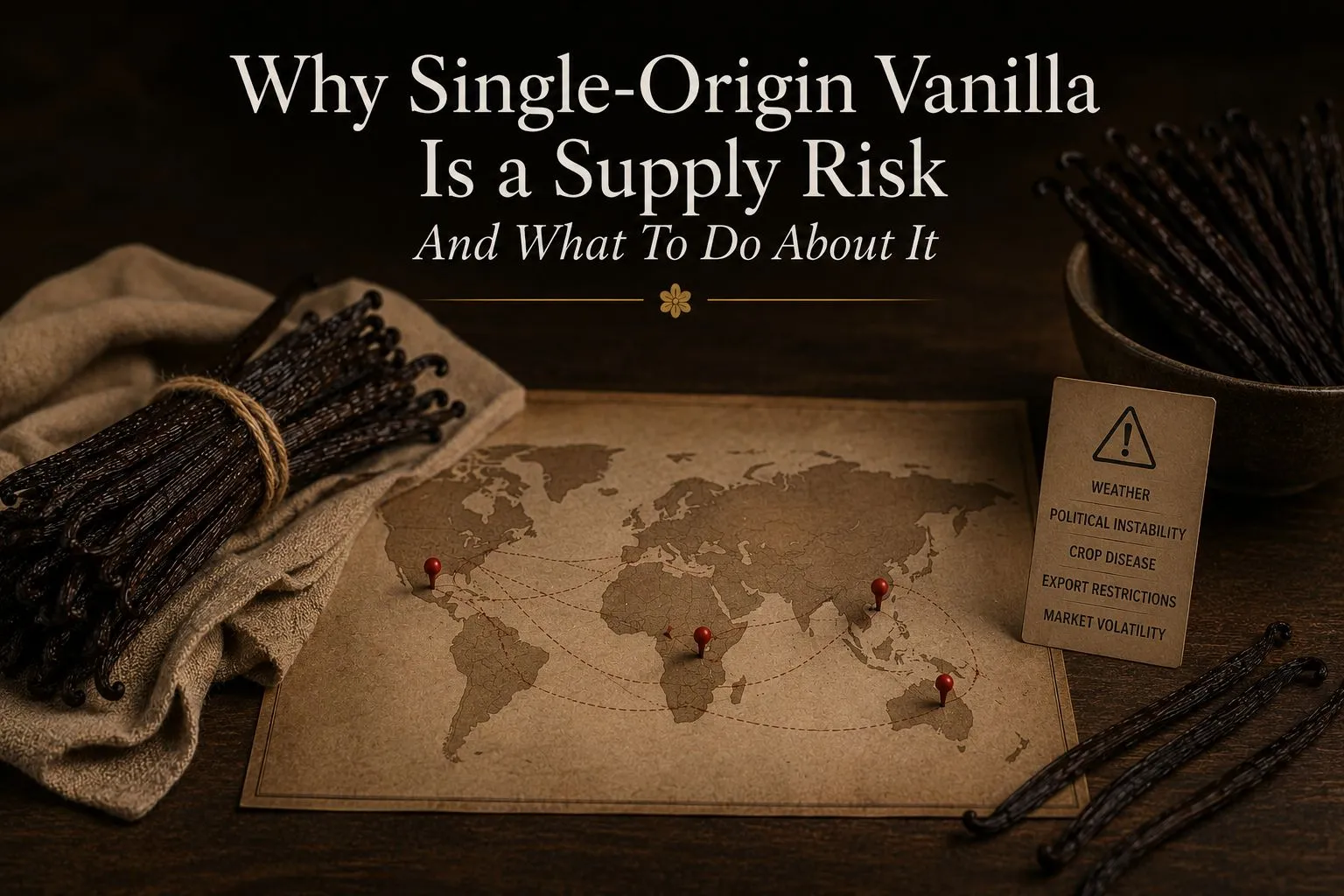
The vanilla industry runs on fragility. A single crop failure in Madagascar which accounts for roughly 80% of global vanilla supply can double or triple the price of vanilla globally within a season. Buyers who sourced exclusively from one origin in 2017 watched prices rise from $20 per kilogram to over $600 in under eighteen months.
The Single-Origin Problem
Most vanilla buyers, even professional ones, source from a single origin. It is simpler. One supplier, one flavor profile, one relationship to manage. But this simplicity carries a hidden cost: exposure. When that origin has a bad season, you have no backup. When your supplier stock runs out, you are competing with every other buyer in the market for whatever remains.
The question is not whether vanilla supply will be disrupted. The question is whether you will be ready when it happens.
What Multi-Origin Sourcing Actually Looks Like
At Eden, we source from two origins: Indonesia and Papua. When one origin underperforms, the other carries the supply load. Because we maintain direct farm relationships in both regions, we have early visibility into crop conditions before disruptions reach the spot market.
How To De-Risk Your Vanilla Sourcing
For professional buyers, the practical steps are straightforward. First, understand your annual volume and what portion comes from a single origin. Second, establish a relationship with a supplier who can offer at least one alternative origin to the same grade specification. Third, request batch documentation: origin, harvest date, moisture content. So you can track consistency independently. Supply security is not a luxury. It is a basic operational requirement.