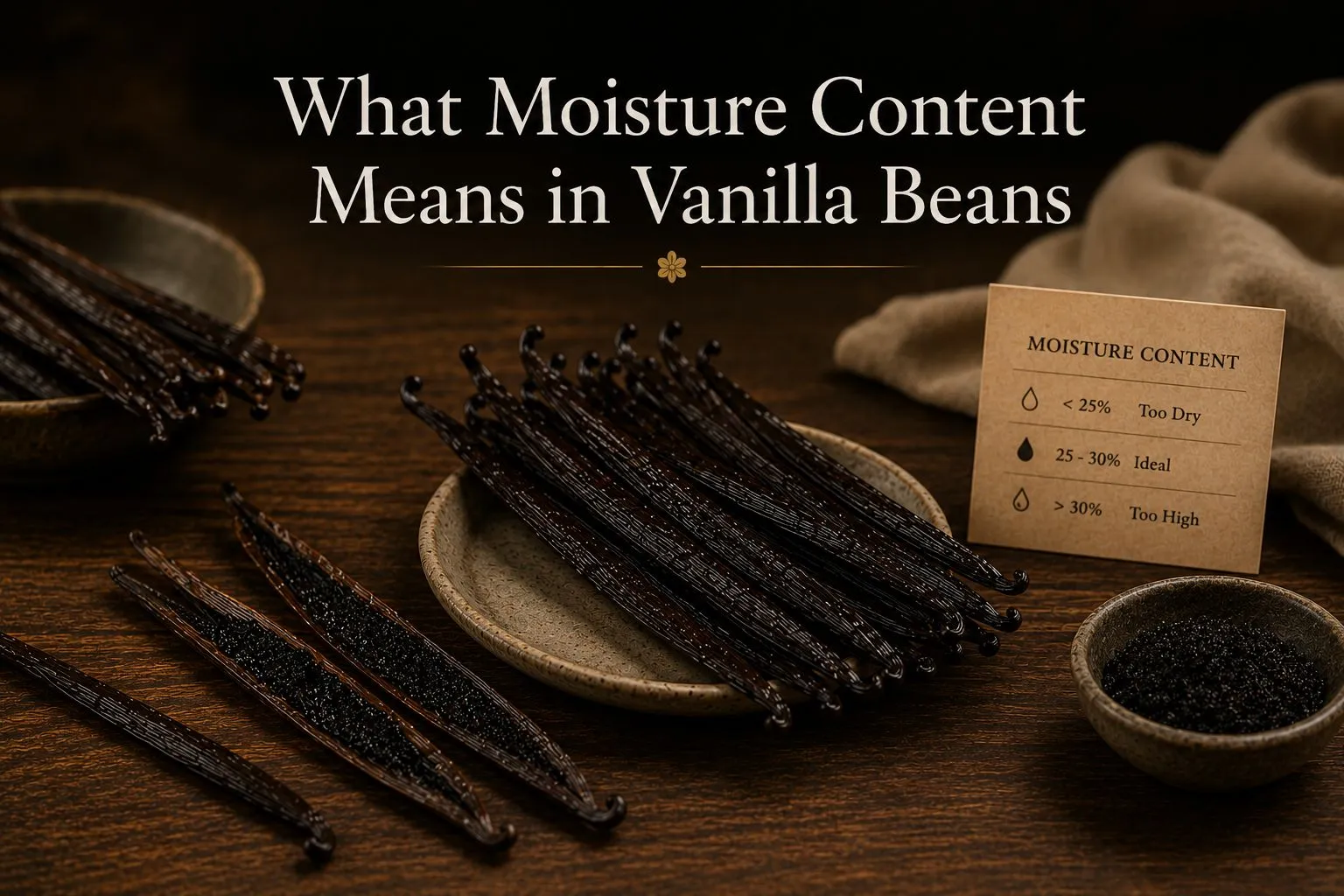
When evaluating vanilla beans, buyers often focus on origin, size, or appearance. However, one of the most important specifications is moisture content.
Whether you are a pastry chef, food manufacturer, or ingredient buyer, understanding moisture content can help you select the right vanilla for your application and avoid costly quality issues.
What Is Moisture Content?
Moisture content refers to the percentage of water remaining in a cured vanilla bean.
After harvesting, vanilla beans undergo a lengthy curing process involving sweating, drying, and conditioning. During this process, moisture gradually decreases while flavour compounds develop.
A vanilla bean with 30% moisture contains approximately 30% water by weight.
Why Does Moisture Matter?
Moisture content influences:
- Texture and flexibility
- Aroma development
- Shelf life
- Risk of mould
- Extraction efficiency
- Shipping weight
Finding the right balance is essential.
Higher Moisture Vanilla Beans
Vanilla beans with moisture levels around 30-35% are typically soft, pliable, and visually attractive.
Benefits include:
- Rich aroma
- Easy splitting
- Premium appearance
- Ideal for gourmet retail and pastry applications
However, higher moisture beans require careful storage and handling.
Lower Moisture Vanilla Beans
Beans cured to lower moisture levels generally offer:
- Longer shelf life
- Reduced mould risk
- Greater stability during shipping
- Better suitability for industrial extraction
These characteristics often make them attractive to manufacturers.
Does Higher Moisture Mean Better Quality?
Not necessarily.
Excessive moisture can increase mould risk and reduce storage stability.
The best moisture level depends on the intended application.
For example:
- Pastry chefs often prefer softer beans
- Extract producers may prioritize extraction yield and consistency
- Industrial users may prioritize stability
How Moisture Content Is Measured
Professional suppliers use laboratory testing to verify moisture levels.
This provides buyers with confidence that specifications remain consistent between batches.
Choosing the Right Moisture Level
The ideal moisture content depends on:
- Product application
- Storage conditions
- Shipping requirements
- Desired shelf life
Working with a supplier that provides detailed specifications and laboratory testing helps ensure consistent results.