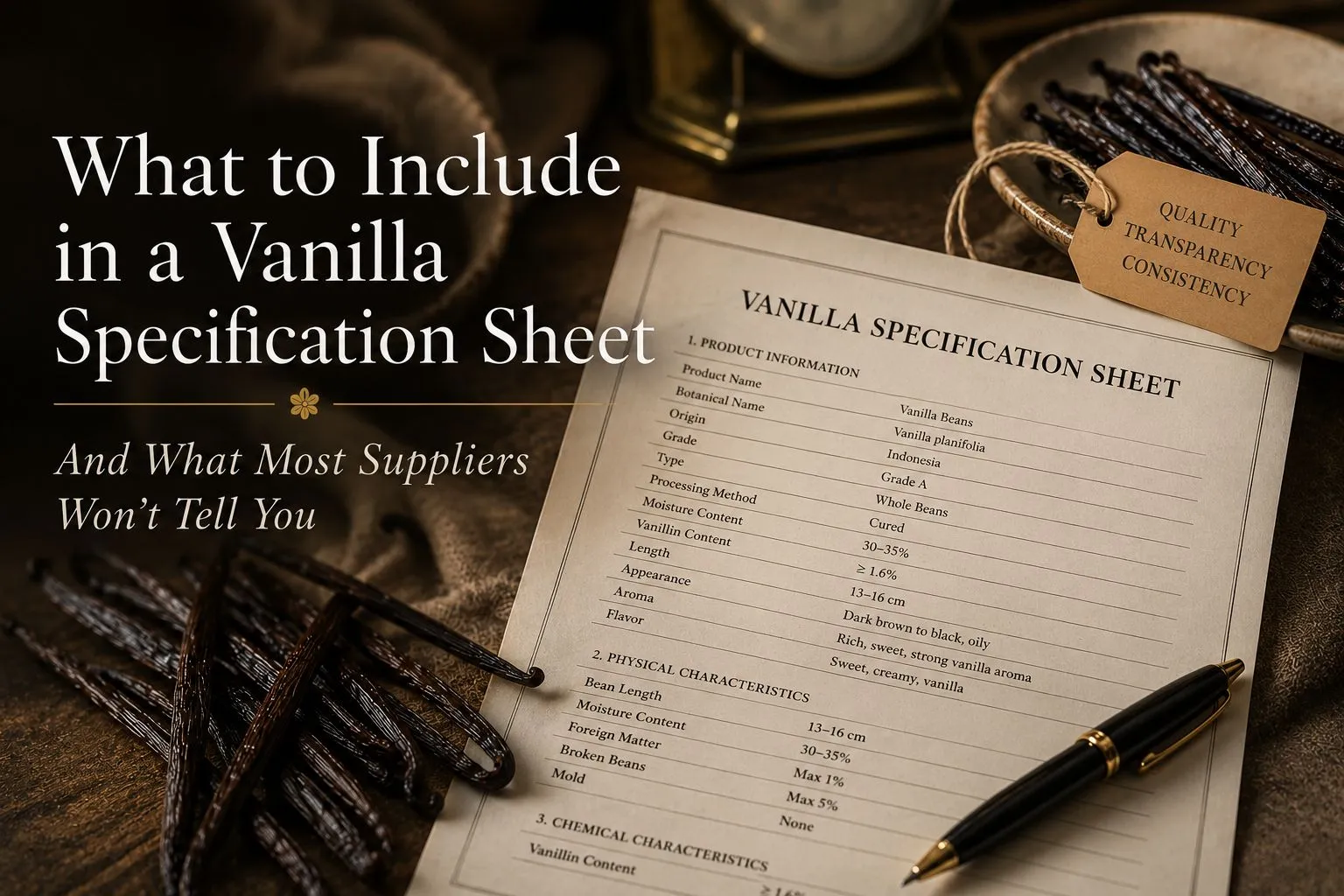
Professional ingredient buyers in every other category (chocolate, dairy, flour) routinely receive specification sheets with measurable parameters. Vanilla is the notable exception. Most vanilla arrives with a grade label, a country of origin, and very little else. Here is what a complete vanilla specification sheet should contain.
The Non-Negotiables
Every vanilla lot should come with: origin (country and ideally region or farm cluster), harvest date or season, grade classification with the supplier specific length and moisture thresholds, moisture content at dispatch (percentage), and vanillin content (percentage). Without these figures, you cannot compare lots objectively or track batch-to-batch consistency.
If a supplier cannot give you moisture and vanillin data, they are not measuring it. They are buying on appearance and experience and passing that uncertainty to you.
Moisture Content: The Number Most Suppliers Hide
Moisture content is the most commercially sensitive figure in vanilla documentation because it directly affects price per kilogram, higher moisture means lower flavor density per gram. Suppliers who do not disclose moisture content are frequently selling beans on the high end of the moisture range, which inflates apparent weight without delivering proportional flavor. Request moisture content as a condition of purchase.
What Eden Provides With Every Order
Every Eden shipment is accompanied by batch documentation that includes origin, harvest date, grade classification, moisture content at dispatch, and vanillin content range for the lot. This is not exceptional practice. It is the minimum standard of a professional ingredient supplier.