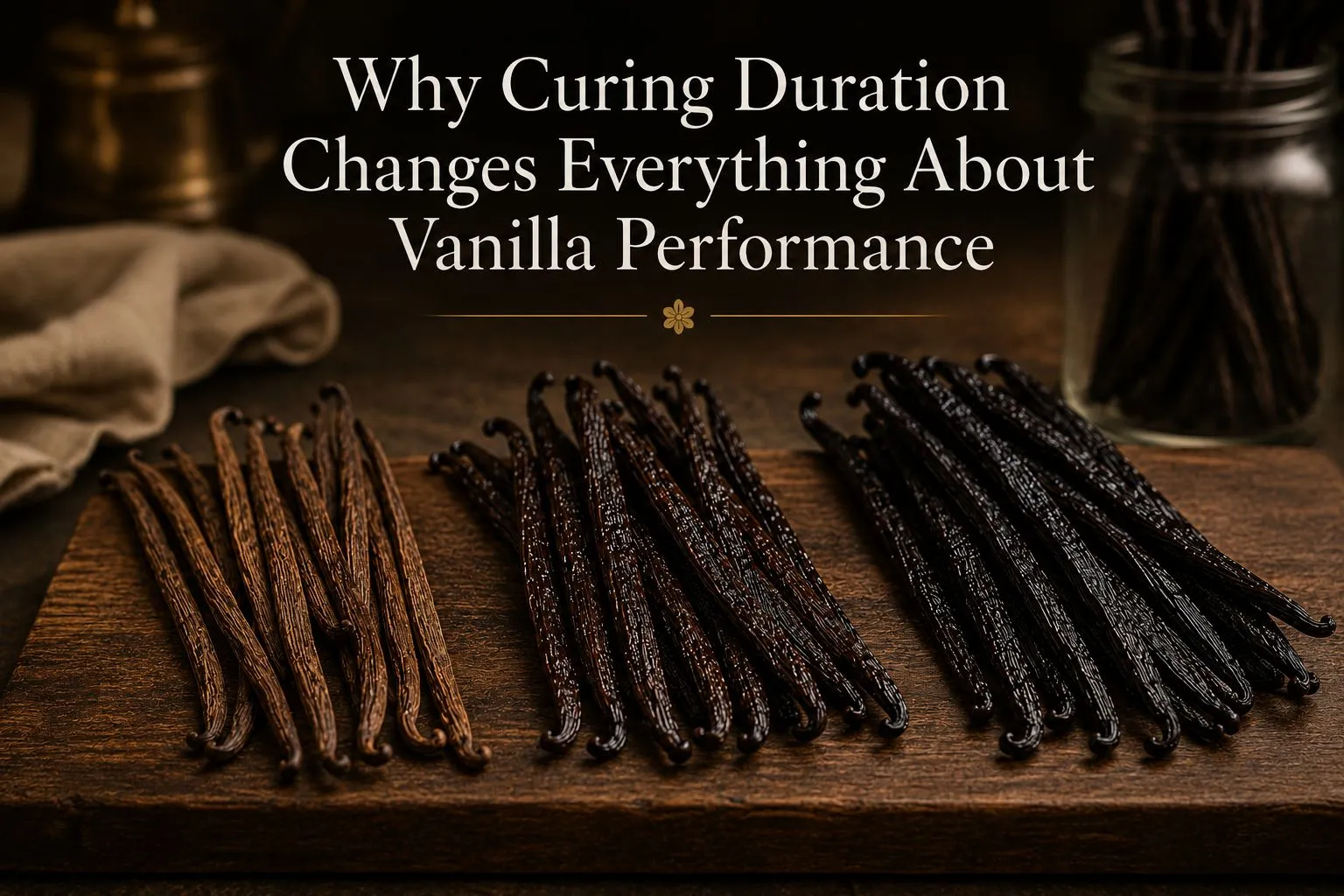
Vanilla curing is the step most buyers never see and the step that most determines the quality of what they receive. The green bean harvested from the vine contains vanillin only in a bound, inactive form. Curing is the process that liberates it, converting enzymatic precursors into the aromatic compounds that define vanilla flavor. Rush it, and you get a thin, harsh product. Do it properly, and you get depth.
What Actually Happens During Curing
The traditional curing process begins with blanching, brief immersion in hot water that stops the bean own enzymatic processes and allows controlled fermentation to begin. The beans are then alternated between sun exposure and sweating in wrapped cloth or wooden boxes, daily, for weeks. Each cycle drives further enzymatic conversion. Over 3-6 months, the bean darkens, becomes oily, and develops the full aromatic complexity that distinguishes high-quality vanilla.
A properly cured bean is not just more aromatic, it is more stable. The aromatic compounds have fully developed and are more resistant to heat and time.
The Cost Of Shortcuts
Pressure-curing and chemical acceleration methods reduce the curing timeline from months to weeks. They also produce a bean with a narrower aromatic profile, often sweeter and more one-dimensional, that degrades faster in heat applications and provides less consistent flavor across batches.
How Eden Controls The Curing Process
We work directly with our farm network to specify curing duration and moisture targets. Every lot is assessed against these targets before dispatch. Our standard is 3-6 months of traditional curing, with moisture content tested and documented. We do not accept early-cured lots.