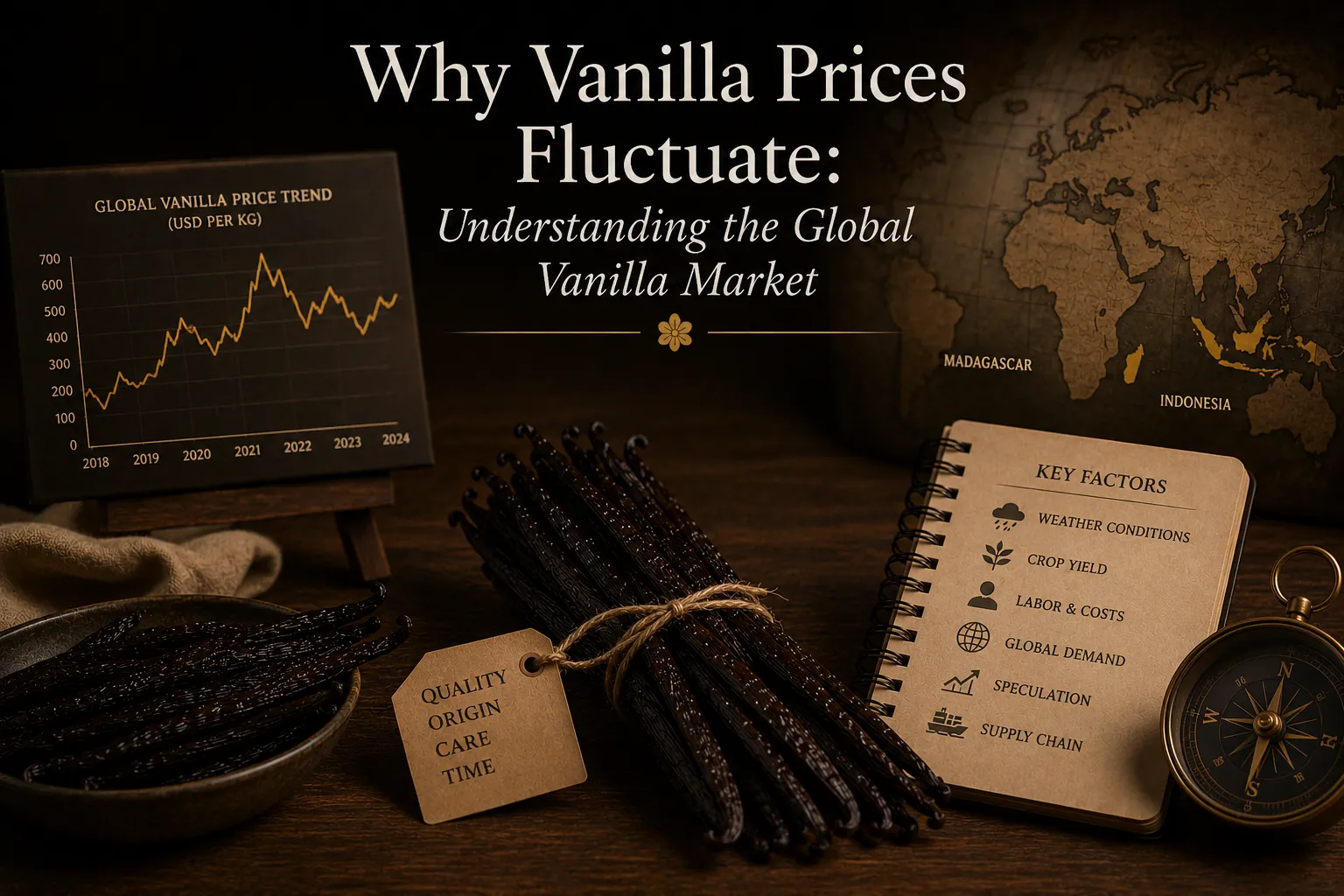
Vanilla is one of the world's most valuable spices, but it is also one of the most volatile.
Significant price swings can create challenges for food manufacturers, bakeries, and ingredient buyers.
Understanding the causes behind these fluctuations helps businesses make better purchasing decisions.
Vanilla Is Labour Intensive
Unlike many crops, vanilla cannot be mass-produced.
Each flower must be hand-pollinated, and each bean requires months of curing and conditioning before it can be sold.
This labour-intensive process limits production capacity.
Weather Events
Vanilla-growing regions are highly vulnerable to:
- Cyclones
- Floods
- Droughts
- Extreme weather
A single weather event can significantly impact global supply.
Growing Global Demand
Demand for natural ingredients continues to increase.
As consumers seek clean-label products, manufacturers are increasingly replacing artificial flavours with natural vanilla.
This growing demand can place additional pressure on supply.
Supply Concentration Risks
Many buyers rely heavily on a single producing country.
When disruptions occur in that region, global prices can rise rapidly.
Diversifying sourcing strategies can help reduce this risk.
Speculation and Market Behaviour
Vanilla prices are also influenced by market sentiment and purchasing behaviour.
Periods of uncertainty can trigger stockpiling and contribute to price volatility.
How Buyers Can Reduce Risk
Several strategies can help:
- Build long-term supplier relationships
- Diversify sourcing origins
- Forecast demand more accurately
- Maintain safety stock
- Work with suppliers offering multiple origin options
The Role of Indonesian Vanilla
Indonesia has become an increasingly important source of high-quality vanilla.
For many buyers, it provides an opportunity to diversify supply while maintaining product quality.
Interested in securing a reliable source of Indonesian vanilla? Contact Eden of Indonesia to learn more about our products and supply capabilities.