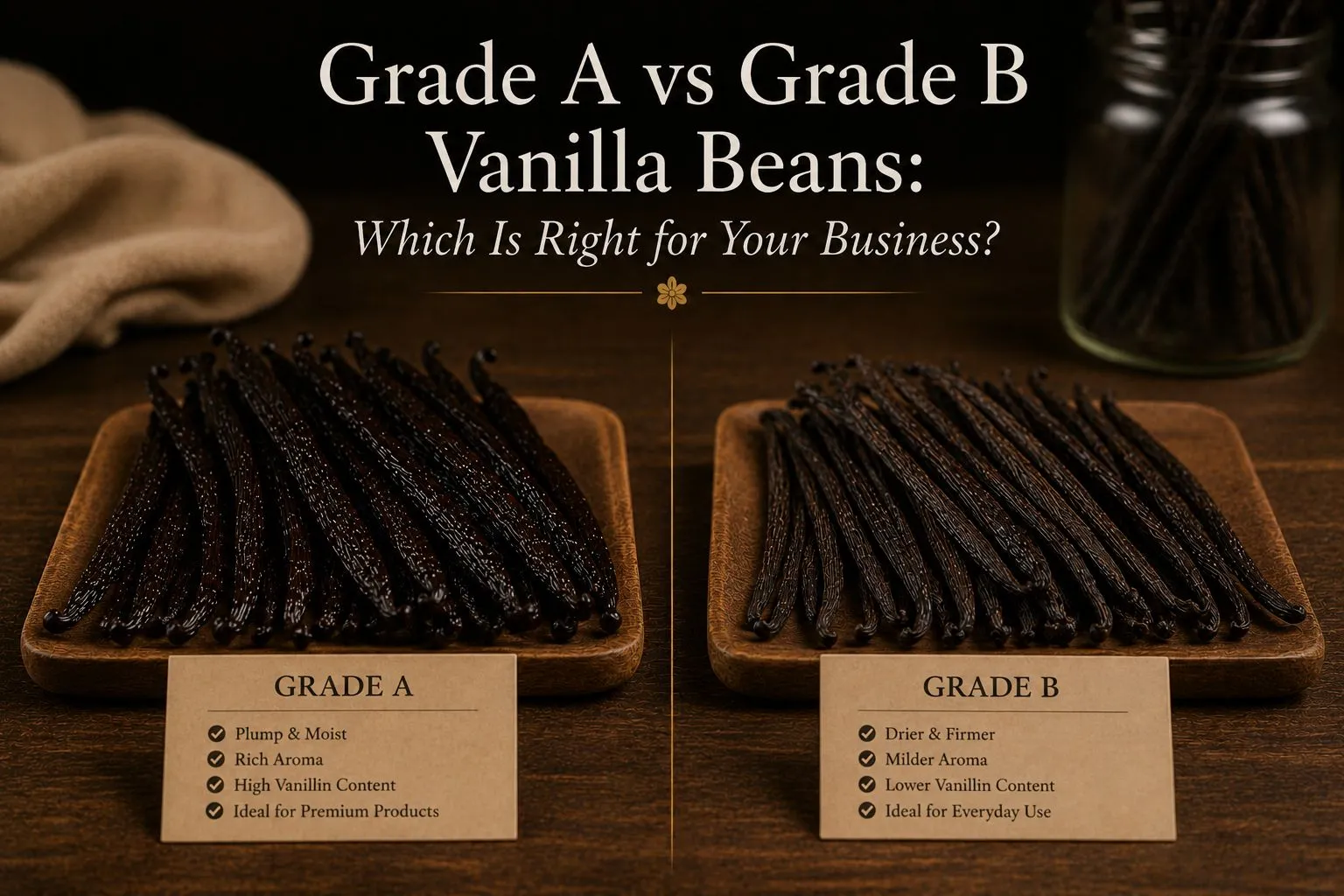
One of the most common questions buyers ask is whether they should purchase Grade A or Grade B vanilla beans.
The answer depends entirely on how the beans will be used.
What Is Grade A Vanilla?
Grade A vanilla beans are typically:
- Longer in length
- Higher in moisture
- Soft and pliable
- Visually attractive
These characteristics make them popular among chefs, bakeries, gourmet retailers, and premium food brands.
Common Uses for Grade A Vanilla
Grade A beans are often used for:
- Pastries
- Desserts
- Ice cream
- Retail packaging
- Visual presentation
Because the beans are often visible to customers, appearance matters.
What Is Grade B Vanilla?
Grade B vanilla beans generally have:
- Lower moisture content
- Slightly drier texture
- Strong aroma
- Excellent extraction properties
Their appearance may be less important, but their flavour potential remains significant.
Common Uses for Grade B Vanilla
Grade B beans are commonly used for:
- Vanilla extract production
- Industrial food manufacturing
- Ingredient processing
- Bulk flavour applications
Is Grade B Lower Quality?
Not necessarily.
A common misconception is that Grade B vanilla is inferior.
In reality, many manufacturers actively prefer Grade B because it offers excellent extraction performance and can provide better value.
The best grade depends on the intended use.
Factors to Consider
When selecting between Grade A and Grade B, buyers should evaluate:
- Product application
- Budget
- Visual requirements
- Moisture specifications
- Extraction needs
Working with a Trusted Supplier
A reliable supplier should provide:
- Consistent grading standards
- Laboratory testing
- Traceability
- Clear specifications
These factors are often more important than the grade itself.